

Commercial floors are not cheap. No matter what type of floor is in your place of business, it likely cost quite a bit of money to lay down. So protecting your investment from road salt and slush is a priority during the winter months. All Pro Cleaning Systems can help.
Cleaning floors is old hat for us. It is something our teams are very familiar with. We invite you to contact us to learn more about our Boston area cleaning services. In the meantime, we have some helpful tips you can start employing right now.
Stopping Salt and Slush at the Door
Salt and slush are the big enemies during the winter months. The best thing you can do for your precious floors is to stop them at the door. In other words, do not let employees and guests track salt and slush around the entire workplace. Stop it in its tracks.
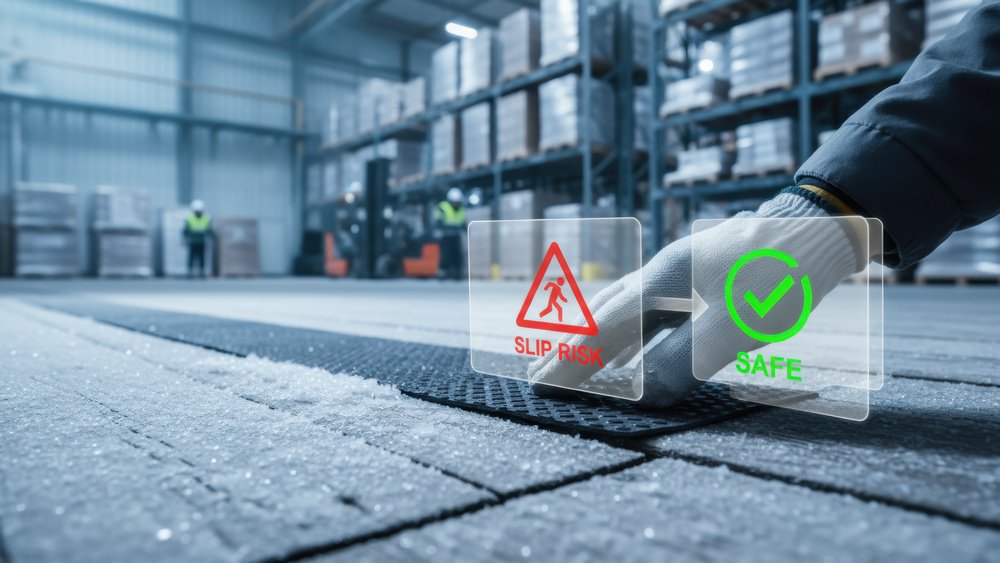
Place heavy-duty winter mats at every entrance. Mats designed to absorb water are ideal. Remind employees to wipe their feet as they enter. You might even ask them to remove their boots or quickly change their shoes before proceeding into the office.
A total of 15-20 feet of matting is ideal. By the time visitors and employees cover that distance, most of the salt and slush on their shoes will have been absorbed by the mats. Over and above matting, implement the following:
- Adjust the Cleaning Plan – Adjust your routine cleaning plan to account for winter traffic. Increase vacuuming (for carpets) and dust mopping (for hard floors) at all entries. Also plan to damp mop hard floors several times per day. Hard floors should be thoroughly mopped every night.
- Maintain Sealers – Pay attention to high-traffic areas and look for any signs that it is time to reseal. Maintaining sealers offers maximum protection against the damaging effects of winter.
A good way to tell whether it is time to reseal is to conduct the water test. Put a small amount of water on the suspected patch of floor. If it doesn’t bead, it is time to reseal.
Tile, Stone, and Concrete Floors
Road salt is bad for tiles and stone because it can etch the surfaces. Etching is very hard to deal with once it occurs. Road salt is also bad for bare concrete because it can lead to pitting and spalling. To protect your tile, stone, and concrete floors:
- Always use a pH-neutral cleaner when mopping and deep cleaning.
- Seal surfaces (with a penetrating sealer) on a regular schedule.
- If any damage is observed, get it taken care of right away.
It is a given that hard floors are easier to care for during the winter months than carpet. But do not assume they don’t need any care at all. Tile, stone, and concrete are susceptible to road salt and slush.
Protecting Carpeted Floors
The big challenge with carpets is their ability to absorb liquids. When road salt and slush are combined, the salt acts like an abrasive material within the carpet fibers. It leaves white rings behind as the moisture evaporates. Over time, the salt causes the carpet fibers to fade and fall.
Extend matting across carpeted surfaces where appropriate. And should any salt spots appear, immediately clean them with a salt-neutralizing spot cleaner. The sooner, the better.
Winter is hard on Boston-area floors. Between road salt and slush, it can be tough to prevent floor damage. Why not let All Pro Cleaning Systems handle your floors along with the rest of your office cleaning? We are the pros. It is in our name.