

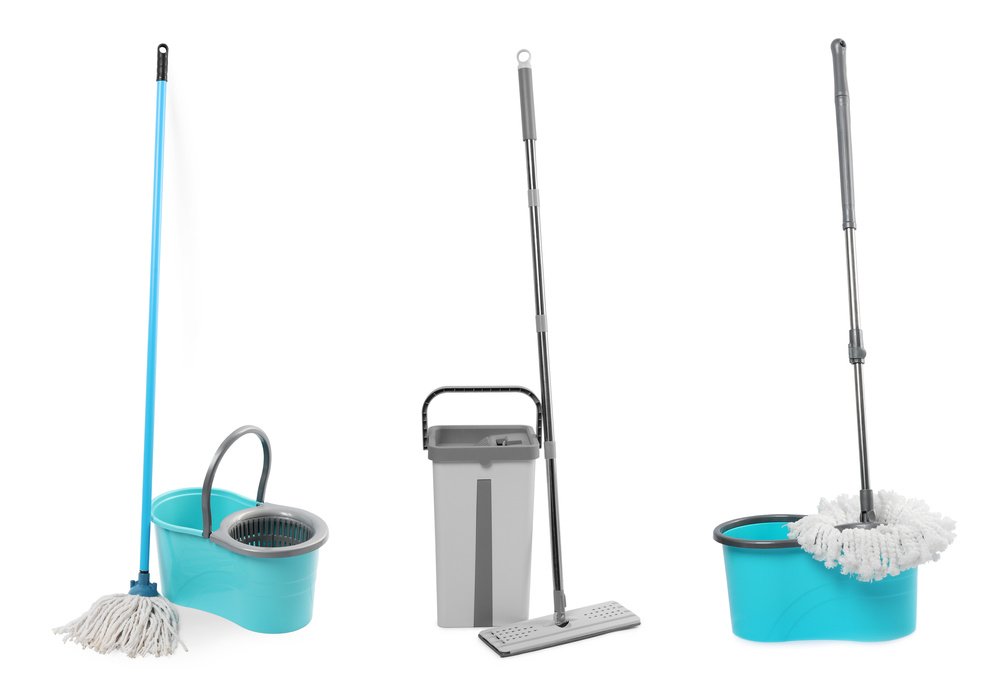
Summary: For decades, professional cleaners have relied on traditional string mops to keep office floors clean. But now that microfiber flat mops are available, cleaning crews have a choice. Is one better than the other? That depends on the types of floors being cleaned and how dirty they are.
Maintaining clean and presentable floors is the baseline for commercial facilities. Here in the Boston area, it is not always easy. Facility managers and maintenance crews face unique challenges covering everything from damp spring humidity to winter salt and slush. It goes without saying that a maintenance crew’s selection of floor care tools directly impacts the quality of its work.
A common debate when it comes to floor care tools is the one between flat and string mops. Both types of mops are designed to clean hard surfaces. Yet their performance, sanitary outcomes, and operational costs can vary quite a bit. It’s best not to just blindly settle on one or the other. Instead, understanding how flat and wet mops work can help define which one is better for a particular job.
Cleaning Power
The starting point for professionals is cleaning power. After all, isn’t that the point of offering Boston office cleaning services? A cleaning tool that doesn’t do a good job is a worthless tool.
The number one goal of any kind of mop is to remove soil, bacteria, and allergens. Cleaning crews want to remove as much as they can without contaminating other surfaces. So, how do the two types of mops stack up?
1. Traditional String Mops
Traditional string mops are typically made of cotton or a synthetic blend. They are paired with bucket and wringer systems. The mop head is saturated in water and cleaning solution, then moved across the floor, wrung out, and re-dipped.
Before going any further, it must be noted that there is a right way to use a traditional wet mop. Used in any other way, a string mop only spreads dirt and debris across the entire floor surface. But when used properly, the mop head soaks up water along with all the dirt and debris you are trying to get rid of. Despite what you may have heard about string mops, they are highly effective when you know how to use them.
When used improperly, string mops can create problems:
- Recycled Dirt – As the cleaning team progresses through an office building, the water in the mop bucket gets progressively dirtier. So unless the water is changed frequently, there is always the risk of recycling the dirt.
- Increased Drying Time – If a string mop is not fully wrung out before the floor is mopped for the final time, excess moisture will be left behind. It will take longer for the floor to dry, and the risk of mildew will increase.
Again, this is all predicated on not using a string mop properly. When used the right way, redistributing dirt and leaving excess water behind generally aren’t problems.
2. Microfiber Flat Mops
Microfiber flat mops are designed around dense microfiber pads attached to a flat frame. Rather than relying mostly on water and cleaning solution, the microfiber pads have tiny hooks at the ends of each fiber that lift and grab dirt, debris, and allergens. The fibers can trap bacteria and the finest dust particles.
It’s also fairly common for Boston office cleaning services to utilize a multi-pad, single-use protocol. A single pad is used in a particular zone or room. Before moving to the next zone or room, the pad is replaced. All the dirty pads collected throughout a shift are turned in for laundering.
Efficiency and Ergonomics
Efficiency and ergonomics are also chief considerations given the amount of labor that goes into cleaning. Any tools capable of reducing physical strain while also speeding things up offer long-term value. Let’s take a look at how string mops and their microfiber counterparts do in this regard.
A traditional string mop can weigh 3 to 5 pounds when fully saturated with water. The process of constantly lifting, wringing out, and maneuvering a string mop requires a considerable amount of labor. In addition, mop buckets filled with water take some effort to move. So strictly from an ergonomic perspective, string mops require more work.
Microfiber flat mops require a lot less work. It is no secret that less effort is one of the things that makes them so attractive. Flat mops usually feature low-profile swivel heads that are easy to maneuver around furniture, into corners, etc. Handles are usually made of lightweight aluminum or composite material as well, so lifting them takes very little effort.
Moisture and Cleaning Solutions
Boston office cleaning services work with a variety of floor surfaces, including luxury vinyl tile, polished concrete, sealed hardwoods, ceramic, and even stone. Water and cleaning solutions impact these surfaces in different ways. Yet there is one thing in common: leaving behind moisture and chemicals can damage all sorts of floors.
String mops, even when used correctly, can leave behind some water and cleaning solution. In heavy-traffic areas or entryways, wet floors require safety cones and extra care. Floors need time to dry as well. Microfiber flat mops don’t require nearly as much water or cleaning solution. Therefore, the chances of leaving behind residual moisture and chemicals are significantly lower.
Heavy Soil Jobs
The last thing to consider is the type of floor and how dirty it is. As attractive as microfiber flat mops are for office corridors, restrooms, and break rooms, they aren’t well suited to heavily soiled floors or jobs involving liquid spills. By their nature, microfiber mop heads are not absorbent. They remove dirt and debris by trapping it.
Heavily soiled floors are usually cleaned more effectively by traditional string mops. String mop heads are designed to absorb a lot of liquid. As they do, they also absorb dirt and debris. So wherever heavy spills or serious soils are a consideration, a string mop wins the day.
Choosing the Right Tool
Boston office cleaning services don’t use one type of mop over the other exclusively. Both types of mops are kept in the inventory so that cleaning crews always have the right tool for the right job. If you handle cleaning in-house, it’s best to follow what the pros do. Make sure your cleaning crews are properly trained on both types of mops. Then let them choose the mop they need for the job at hand.
FAQs
Do flat mops prevent cross-contamination better?
Most of the time, yes. Flat mops trap dirt and debris so that it can’t be redistributed across a floor’s surface.
Are flat microfiber mops considered more ergonomic?
Yes. Microfiber flat mops are lighter and easier to maneuver. They are considered the more ergonomic choice.
Do string mops leave behind excess water and chemicals?
One of the downsides of string mops is that, when used improperly, they tend to leave behind moisture and chemicals. However, learning how to use a string mop properly tends to reduce the problem.
Why are string mops better for heavily soiled floors?
String mops can absorb tremendous amounts of water and dirt. Microfiber mop heads do not absorb; they trap dirt. That makes them less effective in heavily soiled areas.